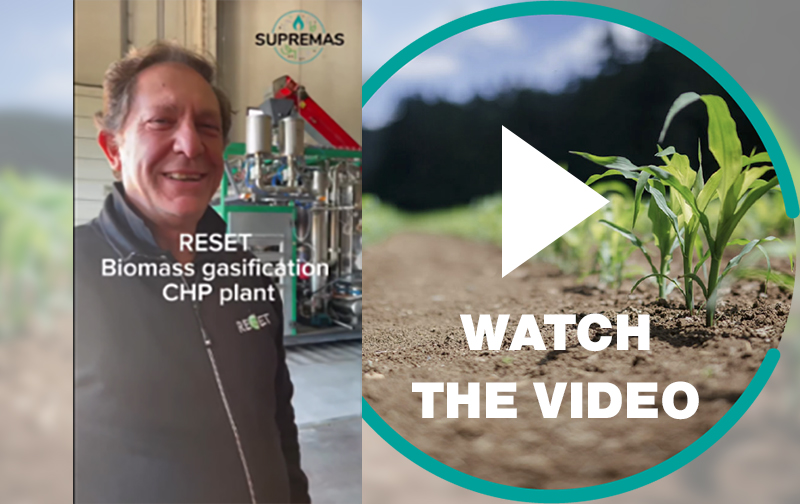
Luciano Di Felice, co-founder and Technical Manager of RESET, presents the gasification unit developed by RESET to test different biomass feedstocks for syngas production. The syngas is used as fuel in the integrated Combined Heat and Power (CHP) plant, which has an electrical output of 20 kW. This unit is the technological starting point of the SUPREMAS modular movable unit.
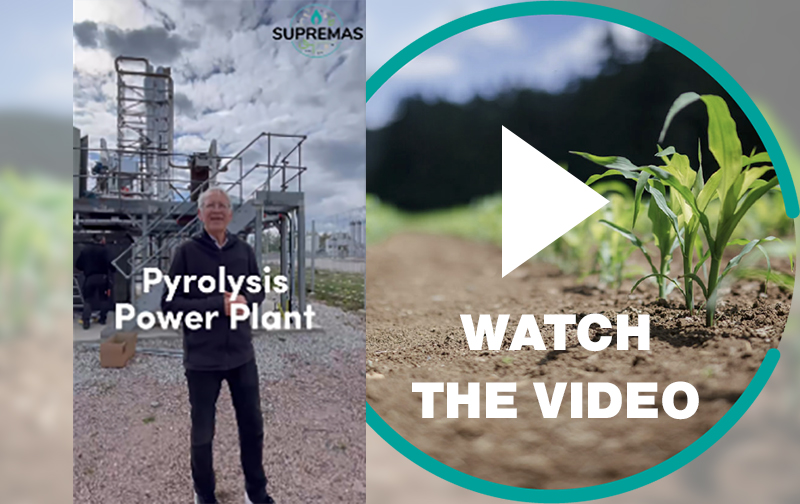
Erik Dahlquist, Professor at Mälardalen University, presents the pyrolysis pilot plant for the production of bio-oil, an alternative to fossil oil. The facility includes a combustor, an anaerobic digester and an electrolyser for the production of hydrogen and oxygen, and also serves as a test bench for the gasification process developed in SUPREMAS.
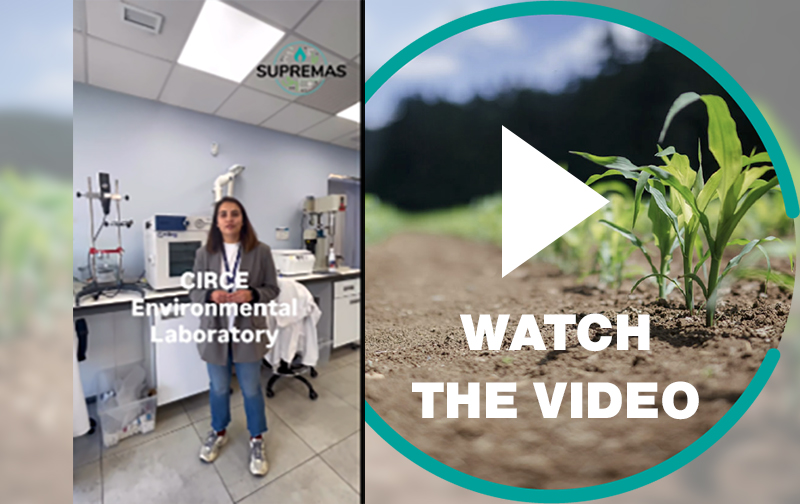
Biochar is one of the products of the SUPREMAS process, alongside syngas. In this video, Paula de la Sen, researcher in the Bioeconomy and Climate Change team at CIRCE, describes the laboratory tests carried out on biochar to guarantee that it can safely be used as a soil amendment.
Ruben Fernandes, CEO of Águas e Energia do Porto (AEdP), guides us through the treatment steps of the Freixo wastewater treatment plant in Porto, Portugal, up to the production of sewage sludge. Sludge from wastewater treatment plants is one of the feedstocks of the SUPREMAS process, which converts it into syngas and biochar. Águas e Energia do Porto hosts one of the two SUPREMAS demonstration sites.
Agroamb, partner of the SUPREMAS project, is one of the leading Spanish producers of fertilisers from biodegradable waste. In this video, Severiano Onega Ares, founder and administrator of Agroamb, presents the treatment plant, which has a capacity of 225,000–250,000 tonnes of biowaste per year. In SUPREMAS, this biowaste feeds the gasification process for the production of syngas and biochar. Agroamb hosts the second SUPREMAS demonstration site.
La Burla Cascina del Sole is a non-intensive farm in Guardabosone, Italy, home to Piedmontese cattle, pigs and poultry. Adriano Pizzi, President of the Board of Directors of the farming company, introduces the farm, which hosted the 1st SUPREMAS Replication Workshop. Guardabosone lies in Valsesia, a valley rich in forest residues and by-products from riverbank and woodland maintenance. The workshop highlighted how these materials, instead of being treated as waste, can be turned into resources — generating electricity, heat and even cooling for local communities.
The Renewable Energy Community of Guardabosone hosted the 1st SUPREMAS Replication Workshop. In this video, Micaela D’Ambrosio from EnGreen, partner of SUPREMAS, explains that the goal of the workshop was to collectively identify viable pathways for the sustainable use of local biomass, fostering synergies among ongoing European initiatives and setting the stage for replicable energy models in similar territories.
During the 2nd SUPREMAS Replication Workshop in Lüneburg, participants visited the city’s wastewater treatment plant, managed by Abwasser, Grün & Lüneburger Service GmbH (AGL). In this video, Lars Strehse, Managing Director of AGL, shares his experience of the SUPREMAS workshop and explains why small-scale, locally sourced energy solutions such as those investigated in SUPREMAS matter for Europe’s rural regions.